What Is Digital Dental Charting?
Digital dental charting is the process of recording a patient's dental condition and treatment information electronically instead of using traditional paper charts.
A digital dental chart may include information about:
Individual teeth
Tooth conditions
Missing teeth
Cavities
Existing restorations
Crowns and bridges
Root canal treatments
Extractions
Periodontal conditions
Planned procedures
Completed treatments
Clinical notes
The information can be updated as the patient's dental condition changes.
How Does Digital Dental Charting Work?
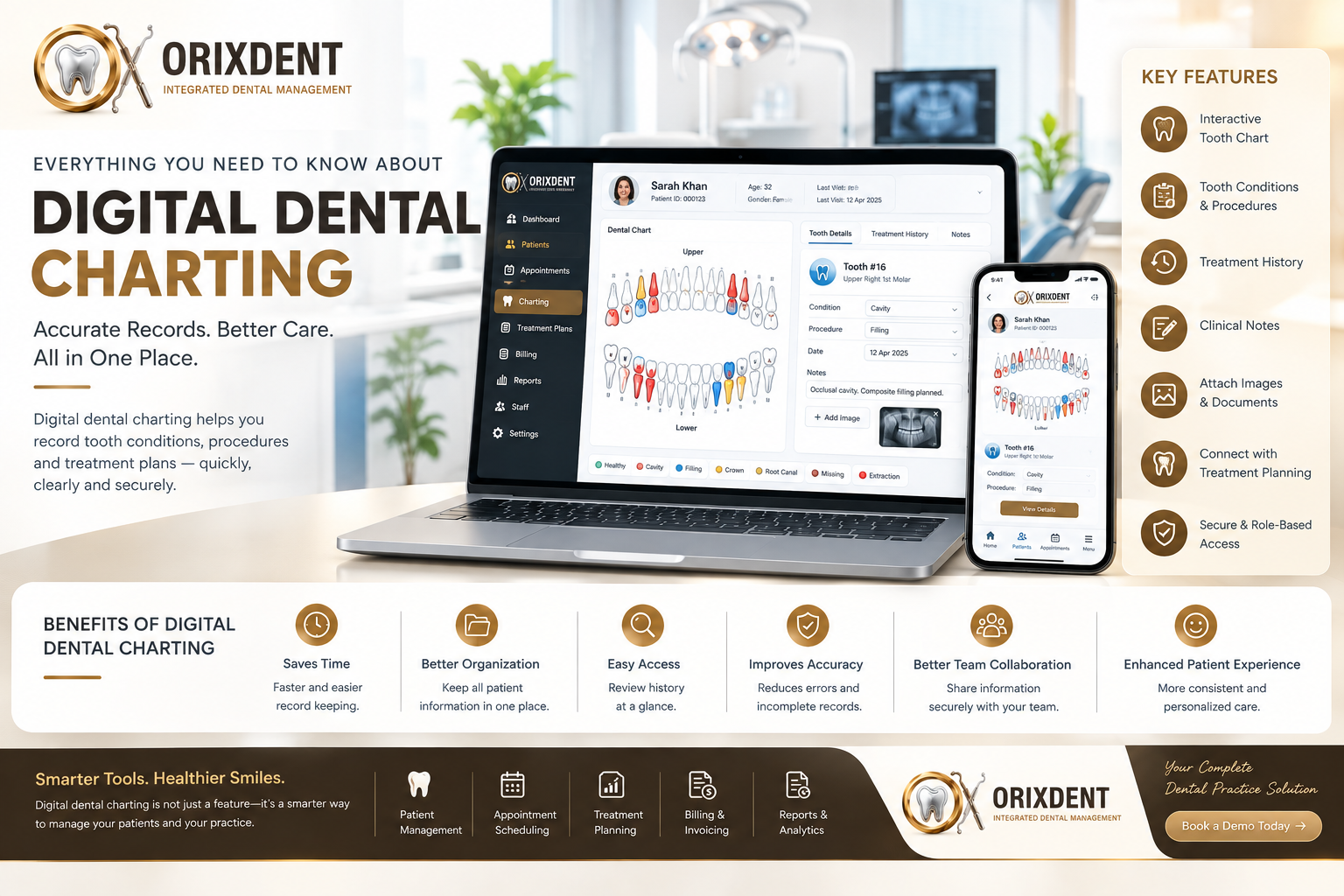
A typical digital dental chart provides a visual representation of the patient's teeth.
The dentist can select an individual tooth and record relevant information about its condition or treatment.
A typical workflow may look like:
Open Patient Profile
↓
Open Digital Dental Chart
↓
Select Tooth
↓
Record Condition or Procedure
↓
Add Clinical Notes
↓
Create or Update Treatment Plan
↓
Save Patient Record
The exact features and workflow depend on the dental software being used.
8 Benefits of Digital Dental Charting
1. Faster Record Keeping
Digital charting can reduce the time required to document dental conditions and procedures.
Instead of writing everything manually, dentists can use predefined options and digital tools to record relevant information.
2. Better Organization
Digital charts keep dental information connected to the patient's profile.
Dentists can potentially access:
Dental history
Previous treatments
Clinical notes
Treatment plans
Prescriptions
Dental images
Appointment history
from one organized patient record.
3. Easy Access to Patient History
When a patient returns for another appointment, the dental team can review previous information before beginning treatment.
This can help provide better continuity of care, subject to appropriate access permissions.
4. Visual Tooth Chart
One of the major advantages of digital charting is the visual representation of teeth.
A dentist can identify individual teeth and record conditions or procedures directly on the chart.
This can make clinical documentation easier to understand and review.
5. Better Treatment Planning
Digital dental charts can be connected with treatment planning features.
Dentists can record:
Recommended procedures
Planned treatments
Completed treatments
Pending treatments
Follow-up requirements
This provides a more organized view of the patient's treatment journey.
6. Reduce Paperwork
Moving from paper charts to digital records can reduce physical paperwork and make records easier to search and organize.
Instead of maintaining large collections of physical files, clinics can manage patient information through their digital system.
7. Improve Team Collaboration
In clinics with multiple dentists and staff members, authorized users can access relevant patient information according to their assigned permissions.
This can help receptionists, dentists, and administrators work with the same up-to-date information.
8. Connect Charting with Other Dental Features
The best dental management systems don't treat charting as an isolated feature.
Digital dental charting can be connected with:
Patient Management → Appointments → Dental Chart → Treatment Plan → Billing → Reports
This creates a more integrated dental practice workflow.
Important Features of Dental Charting Software
When selecting digital dental charting software, clinics should consider the following features:
Interactive Tooth Chart
Dentists should be able to select individual teeth and record relevant information.
Tooth Conditions
The system should support documentation of common dental conditions and findings.
Treatment History
Previous procedures should remain organized within the patient's record.
Clinical Notes
Dentists should be able to document relevant observations and treatment notes.
Treatment Planning
Charting should work together with treatment planning where possible.
How Digital Dental Charting Improves the Patient Experience
Digital charting doesn't only benefit dentists and staff. It can also contribute to a more organized patient experience.
When patient information is easy to access, the dental team can spend less time searching through paperwork and more time focusing on the patient's visit.
Digital records can also make it easier to explain treatment plans by using visual tooth charts and organized treatment information.
Digital Dental Charting and Dental EMR
Digital dental charting is often part of a broader Dental EMR (Electronic Medical Record) system.
An integrated dental EMR can combine:
Patient information
Medical history
Dental history
Dental charting
Clinical notes
Treatment plans
Prescriptions
Documents
Appointments
This allows clinics to maintain a more complete digital patient record.
How Orixdent Supports Digital Dental Charting
Orixdent is an integrated dental management solution designed for modern dental practices.
Its dental workflow can bring together:
Patient Management
Digital Dental Charting
EMR & Digital Records
Treatment Planning
Appointment Scheduling
Billing & Invoicing
Reports & Analytics
Secure Access
By connecting digital charting with other clinic operations, Orixdent helps dental teams maintain organized patient information and streamline their daily workflow.
Tips for Implementing Digital Dental Charting
Train Your Team
Make sure dentists and staff understand how to use the charting system correctly.
Use Consistent Documentation
Establish clear internal guidelines for recording dental conditions and procedures.
Review Patient Records Regularly
Keep records accurate and up to date.
Protect Patient Information
Use appropriate authentication, permissions, backups, and other security measures.
Choose an Integrated System
A dental charting solution that connects with patient management, appointments, treatment planning, and billing can provide a more efficient workflow.
Conclusion
Digital dental charting is an important part of modern dental practice management. It provides dentists with a structured way to document tooth conditions, procedures, treatment history, and clinical information.
When connected with patient management, digital records, treatment planning, appointments, billing, and reporting, digital charting can help create a more organized and efficient dental workflow.
With Orixdent, dental clinics can move toward a centralized digital approach to managing patient records and everyday practice operations.
Orixdent — Integrated Dental Management for modern dental clinics.