Introduction
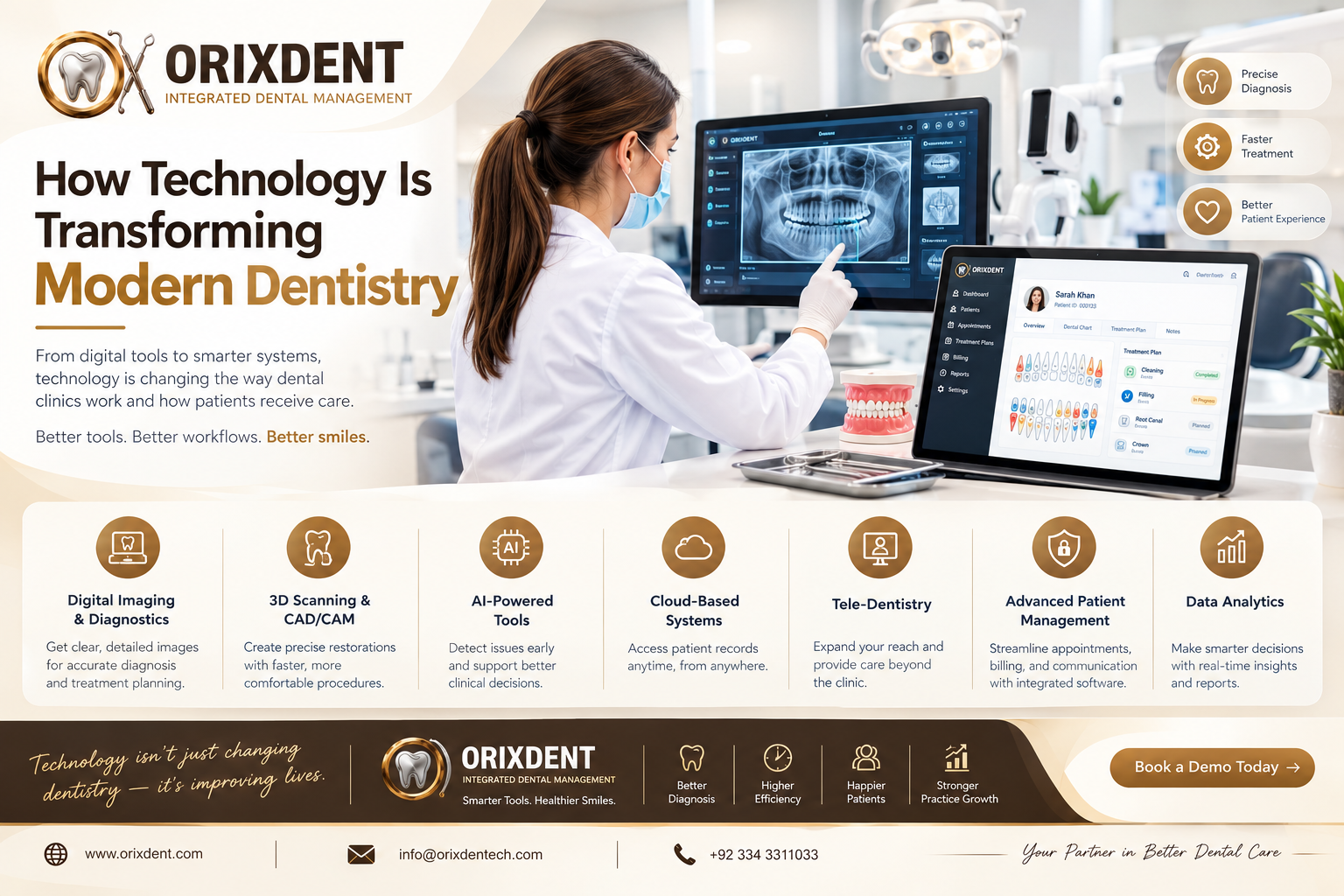
echnology is changing how dental clinics operate, manage patient information, and deliver care. From digital dental records and advanced imaging to appointment scheduling and integrated practice management software, modern tools are helping dental professionals improve organization and efficiency.
Traditional paper-based processes can make it difficult to manage appointments, retrieve patient histories, track treatments, and maintain financial records. Digital solutions help bring these activities together, making daily clinic operations easier to manage.
In 2026, technology in modern dentistry is not just about advanced dental equipment. It also includes the software and digital workflows that help dentists, receptionists, and clinic administrators work more effectively.
1. Digital Patient Records
Digital patient records are replacing many traditional paper-based recordkeeping processes.
Dental software can help clinics organize patient profiles, medical and dental histories, clinical notes, treatment records, prescriptions, and relevant documents.
Key benefits:
Faster access to patient information
More organized clinical documentation
Easier record searching and updating
Better continuity between appointments
Reduced dependence on physical files
Digital records should be protected through appropriate security controls, backups, and access permissions.
2. Smart Appointment Scheduling
Managing appointments manually can create scheduling conflicts and additional administrative work.
Modern dental appointment software helps clinics organize dentist availability, book appointments, manage cancellations, and schedule follow-up visits.
Depending on the platform, automated reminders can also help patients remember their appointments and make rescheduling easier.
These features can improve scheduling efficiency and help clinics reduce avoidable missed appointments.
3. Digital Dental Charting
Digital dental charting allows dentists to document tooth conditions and procedures through an electronic chart.
Instead of relying entirely on paper diagrams, dentists can use digital tools to record dental findings, existing restorations, planned procedures, and completed treatments.
When connected to patient records and treatment plans, digital charting can help keep clinical information organized and accessible to authorized team members.
4. Artificial Intelligence in Dentistry
Artificial intelligence is becoming an important area of dental innovation.
Depending on the application, AI-powered tools may assist dental professionals with tasks such as analyzing dental images, identifying patterns, supporting clinical documentation, and organizing administrative workflows.
AI should support—not replace—professional dental judgment. Dentists remain responsible for interpreting findings and making appropriate clinical decisions.
5. Advanced Dental Imaging
Digital X-rays, intraoral scanners, and 3D imaging technologies are changing how dental professionals examine and document oral conditions.
These technologies can help dentists visualize dental structures, capture detailed information, and support treatment planning.
The appropriate technology depends on the procedure, clinical requirements, and the needs of each patient.
6. Integrated Dental Practice Management Software
Dental clinics need more than clinical technology to operate efficiently. They also need reliable systems for managing everyday business activities.
Integrated dental practice management software can bring several important functions into one platform:
Patient management
Appointment scheduling
Digital dental records
Dental charting
Treatment planning
Billing and invoicing
Reports and analytics
Staff access and permissions
Connecting these functions can reduce duplicated data entry and make clinic information easier to organize.
7. Cloud-Based Dental Software
Cloud-based dental software can allow authorized users to access clinic information through supported devices and locations.
Depending on the provider, cloud platforms may offer centralized records, automatic updates, backup capabilities, and support for multiple branches.
Before choosing a cloud solution, clinics should evaluate data security, privacy practices, backup and recovery procedures, internet requirements, and compliance with applicable regulations.
8. Digital Billing and Financial Management
Technology is also simplifying the financial side of dental practice management.
Digital billing systems can help clinics create invoices, record payments, monitor outstanding balances, issue receipts, and review financial reports.
When billing is connected with treatment and patient records, clinic staff can manage financial information in a more organized way.
9. Data Analytics for Better Decisions
Dental software can turn routine clinic activity into useful performance reports.
Depending on the system, managers may monitor:
New and returning patients
Appointment bookings and cancellations
Missed appointment trends
Treatment activity
Revenue and payments
Outstanding balances
Branch-level performance
Reviewing these metrics can help clinic owners identify operational challenges and make better-informed business decisions.
10. Data Security and Patient Privacy
As dental clinics adopt more digital tools, protecting patient information becomes increasingly important.
Dental practices should look for software that supports appropriate security measures, including:
Secure authentication
Role-based access permissions
Data encryption where supported
Reliable backup and recovery
Activity monitoring
Secure handling of patient documents
Clinics should also train staff to follow safe data-handling practices and comply with applicable privacy requirements.
How Orixdent Supports Modern Dental Clinics
Orixdent is an integrated dental management solution designed to help modern dental clinics organize their daily operations.
It brings key practice management activities together, including patient management, appointment scheduling, digital records, treatment planning, billing, and reporting.
By centralizing essential workflows, Orixdent helps dental teams work toward better organization, reduced administrative effort, and more efficient clinic management.
For clinics looking to modernize their administrative processes, an integrated platform can be a valuable part of their digital transformation.
Explore Orixdent at https://orixdent.com/.
Benefits of Technology in Modern Dentistry
Adopting suitable dental technologies can help clinics:
Improve efficiency: Reduce repetitive administrative tasks and organize daily workflows.
Enhance recordkeeping: Keep patient information structured and easier to retrieve.
Support treatment planning: Connect clinical documentation with planned and completed procedures.
Improve communication: Manage appointments and follow-ups more effectively.
Monitor performance: Use reports to understand patient activity and clinic operations.
Support growth: Choose scalable solutions that can accommodate additional staff or branches.
The results depend on the technology selected, how it is implemented, and how consistently the clinic uses it.
How to Choose the Right Dental Technology
Before investing in new dental technology, clinic owners should consider these questions:
Does it address the clinic's actual operational needs?
Is it easy for dentists and staff to learn?
Can it integrate with existing systems and workflows?
Does it provide suitable security and privacy controls?
Can it support the clinic as it grows?
What training and technical support are available?
Are the total costs clear, including setup and maintenance?
Can the clinic measure whether the technology improves efficiency?
Selecting technology based on practical requirements can help clinics avoid unnecessary costs and improve adoption
Conclusion
Technology is transforming modern dentistry by making clinical information, administrative workflows, and practice management more organized and accessible.
From digital patient records and dental charting to advanced imaging, cloud software, and data analytics, the right tools can help clinics improve efficiency while supporting high-quality patient care.
For dental practices planning their digital journey, Orixdent offers an integrated approach to managing essential clinic operations.
Orixdent — Integrated Dental Management for modern dental clinics.