

Introduction
Running a successful dental clinic requires more than providing excellent dental care. Dentists and clinic managers also need to understand patient trends, appointment attendance, treatment performance, revenue, and daily operations.
Without organized data, making business decisions can become difficult. Important information may be scattered across paper records, spreadsheets, billing systems, and appointment calendars.
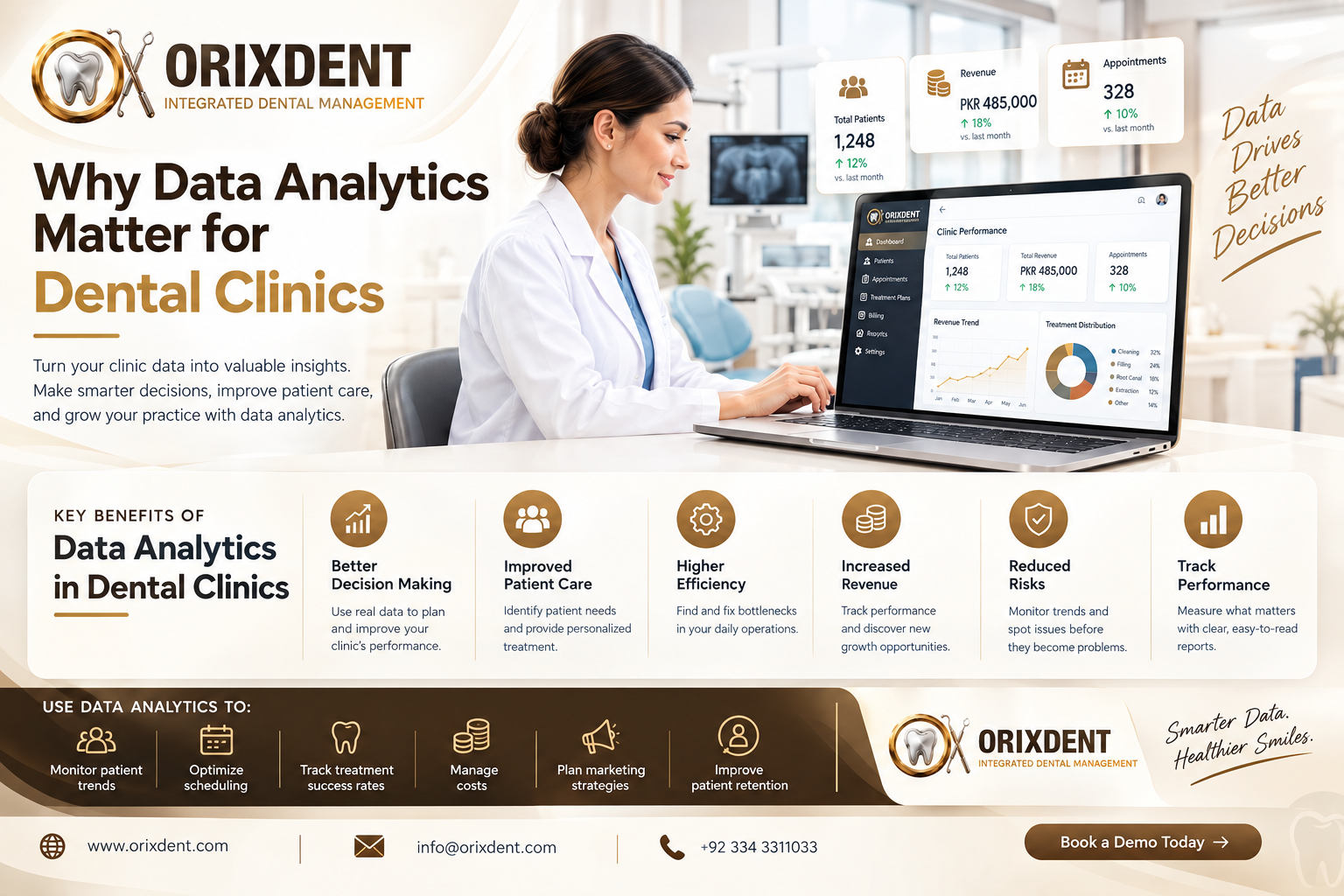
This is where dental clinic data analytics becomes valuable. Modern dentist software helps organize clinic information into reports, dashboards, and measurable insights, allowing dental teams to make more informed decisions.
With solutions such as Orixdent, dental clinics can work toward better organization, improved efficiency, and smarter practice management.
What Is Data Analytics in Dental Clinics?
Dental clinic data analytics is the process of collecting, organizing, and reviewing clinic data to understand performance and identify opportunities for improvement.
Depending on the software, analytics may cover:
Patient registrations and growth
Appointment bookings and cancellations
No-show rates
Treatment and procedure trends
Revenue and payment collections
Outstanding balances
Dentist and staff productivity
Branch-level performance
By reviewing these metrics regularly, clinic managers can make decisions based on actual performance rather than assumptions.
6 Key Benefits of Dental Clinic Data Analytics
1. Better Decision-Making
Reviewing patient, appointment, and financial data helps clinic owners identify what is working and where improvements are needed.
2. Improved Patient Care
Patient history and treatment records can help dental teams understand care needs and plan appropriate follow-ups.
3. Increased Operational Efficiency
Appointment and workflow reports can reveal scheduling gaps, delays, and areas where administrative processes can improve.
4. Better Financial Visibility
Revenue reports, payment collections, and outstanding balances help managers monitor their clinic's financial performance.
5. Reduced Appointment No-Shows
Tracking cancellations and missed appointments helps clinics identify patterns and improve reminder and follow-up processes.
6. Monitor Clinic Growth
Patient registrations, completed treatments, and appointment trends help managers understand how the practice is developing over time.
Important Analytics Features in Dentist Software
When choosing dental practice management software, look for:
Performance Dashboard: View important clinic metrics in one place.
Patient Reports: Monitor new and returning patients.
Appointment Analytics: Track bookings, cancellations, and no-shows.
Financial Reports: Review revenue, payments, and outstanding balances.
Treatment Reports: Understand procedure trends and treatment activity.
Multi-Branch Analytics: Compare clinic locations when supported.
Data Export: Export reports for further analysis, where available.
Access Controls: Ensure sensitive data is accessible only to authorized users.
How Orixdent Supports Data-Driven Dental Management
Orixdent is an integrated dental management solution designed to help clinics organize patient records, appointments, treatments, billing, and reporting.
By bringing key clinic information together, Orixdent supports a more structured approach to reviewing clinic activity and making informed management decisions.
Conclusion
Dental clinic data analytics helps transform everyday clinic information into insights that support better planning, organized workflows, and informed decisions.
With the right dental practice management software, clinics can monitor important performance indicators, identify opportunities for improvement, and plan for sustainable growth.
Orixdent — Integrated Dental Management for smarter clinics and better care.